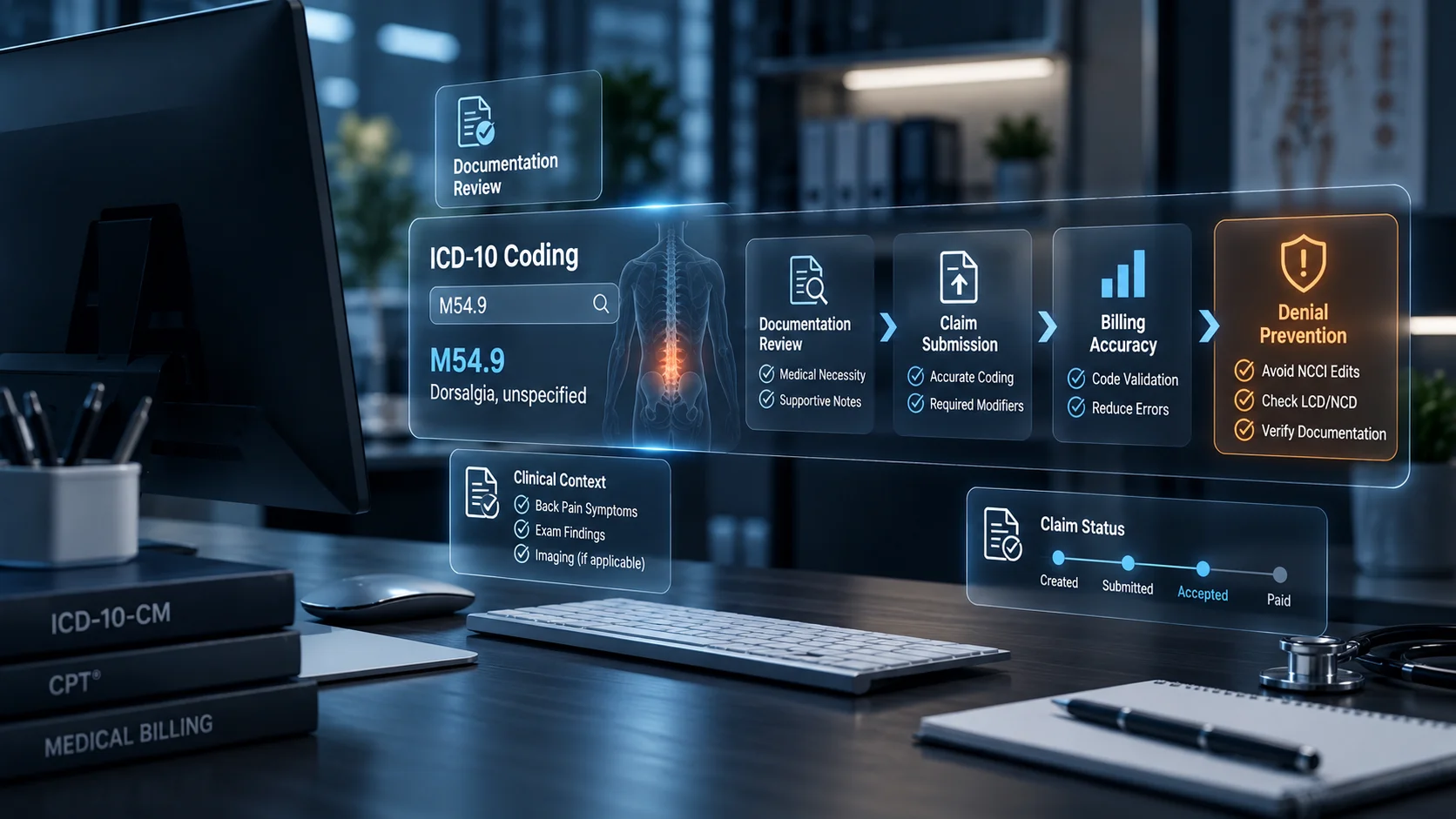
Claim denials do not always start at the billing stage. In many cases, the problem begins much earlier during patient intake.
One of the most common causes of denied or delayed claims is inaccurate or incomplete insurance verification. When eligibility is not confirmed correctly, claims are often rejected, payments are delayed, and administrative work increases.
Insurance eligibility verification in medical billing is a critical step in the front end revenue cycle management. It ensures that patient coverage is active and that services are billable before care is provided.
This blog explains what eligibility verification is, why it matters, and how medical practices can improve accuracy to reduce claim denials and strengthen financial performance.
What Is Insurance Eligibility Verification in Medical Billing
Billing staff verifies a patient’s insurance coverage before healthcare providers deliver services. This process confirms that the patient’s policy is active and that the plan covers the anticipated services.

During eligibility verification, staff review several key details. They confirm active insurance, verify policy benefits, identify co-pays and deductibles, and check whether insurance covers specific services. They also review referral requirements and determine if procedures require prior authorization.
This vital process ensures billing teams submit accurate claims. By verifying eligibility, billing teams avoid submitting claims likely to be denied. Providers can clearly communicate anticipated costs to patients before treatment, improving transparency and reducing billing confusion.
Why Insurance Eligibility Verification Is Important?
Eligibility verification plays an important role in medical billing, as it directly affects claim approval rates and overall revenue cycle performance. Completing this step accurately prevents various billing issues that delay payments and increase administrative workload.

One of the biggest benefits of proper eligibility verification is the reduction of claim denials. When insurance coverage is confirmed in advance, billing teams can avoid submitting claims to inactive policies or for non-covered services. This leads to fewer rejected claims and faster reimbursements.
Another key benefit is improved patient billing transparency. Patients are more likely to understand their financial responsibility when co-pay amounts, deductibles, and coverage limitations are explained before the visit. This reduces confusion and improves patient satisfaction.
Eligibility verification also eases the administrative staff’s burden. When administrative staff submits claims correctly the first time, they reduce the need for rework, follow-up, and resubmission. This helps staff focus on higher-value tasks and boosts overall efficiency in revenue cycle management.
The Insurance Eligibility Verification Process
A structured patient insurance verification process ensures accuracy. Standardized workflows reduce errors and improve claim acceptance rates.

Collect Patient Information
The first step is collecting accurate patient demographics and insurance details. This includes the patient’s full name, date of birth, insurance provider, policy number, and group number. Any errors at this stage can lead to claim rejection later in the process.
Front desk staff should verify this information during scheduling and again at check-in.
Verify Coverage with Payer
After collecting information, verify coverage with the payer using portals, clearinghouses, or automated tools.
Confirm the patient’s insurance is active on the service date.
Check Benefits and Coverage
After confirming coverage, the billing staff reviews benefits, noting covered services, limits, and documentation needs.
Understanding coverage avoids claims for services not eligible for reimbursement.
Confirm Co-Pay and Deductibles
It is important to determine the patient’s financial responsibility before the visit. This includes confirming co-pay amounts, deductibles, and any out-of-pocket costs.
Providing this information upfront improves patient satisfaction and increases the likelihood of collecting payments at the time of service.
Identify Authorization Requirements
Some medical services require prior authorization from the insurance payer. If authorization is not obtained before the procedure, the claim may be denied even if the service is medically necessary.
Verifying authorization requirements in advance helps avoid these preventable denials.
Common Insurance Eligibility Verification Errors
Small mistakes in eligibility verification quickly cause billing problems. Know common errors to improve accuracy and reduce claim denials.

Incorrect Patient Information
Mistakes in patient demographics or insurance details cause claim rejections. Wrong policy numbers or spelling block claim processing.
Failure to Verify Active Coverage
If you do not confirm active coverage, your claim will be rejected. Always verify coverage before every visit, as policies change or expire.
Missing Authorization Requirements
If you do not check authorization requirements, your claim will be denied. Many procedures require pre-approval, and missing this step results in lost revenue.
Not Checking Service Specific Coverage
Some services are not covered by all plans. If staff skip coverage checks for specific procedures, claims will be denied.
Last Minute or No Verification
Avoid rushing or skipping verification. Allocate sufficient time for thorough checks and use checklists to ensure accuracy and completeness before submitting claims.
How Eligibility Errors Lead to Claim Denials
Eligibility errors often lead directly to claim denials and payment delays. When incorrect insurance information is submitted, the payer may reject the claim before processing begins. This creates additional work for billing teams who must correct the error and resubmit the claim.
If services are provided without verifying coverage, the claim may be denied because the service is not included in the patient’s plan. Similarly, missing prior authorization can result in payment refusal even when the service was necessary.
These issues not only delay reimbursement but also increase administrative workload. Billing staff must investigate the denial, gather missing information, and resubmit the claim. This process takes time and can negatively impact cash flow.
Practices that focus on accurate eligibility verification can significantly reduce these issues and improve claim acceptance rates.
Best Practices for Accurate Insurance Eligibility Verification
Effective eligibility verification combines strong processes, staff training, and technology. Following best practices reduces errors and improves billing.
Verify Insurance Before Every Visit
Insurance coverage should be verified before each patient visit. Even returning patients may have changes in their coverage that need to be confirmed.
Use Automated Verification Tools
Technology can help streamline the verification process. Automated tools enable staff to quickly check coverage and reduce manual errors.
Train Front Desk Staff
Front desk teams play a critical role in collecting and verifying patient information. Regular training ensures they understand the importance of accuracy and follow proper procedures.
Standardize Verification Workflow
Creating a consistent workflow helps ensure that all verification steps are completed every time. This reduces variability and improves accuracy.
Document Verification Details
Keeping records of verification results helps billing teams reference information later if needed. It also provides documentation in case of disputes with payers.
How Eligibility Verification Improves Revenue Cycle Performance
Accurate eligibility verification directly impacts revenue cycle performance. When claims are submitted with verified information, they are more likely to be accepted on the first submission.
This leads to a higher clean claim rate, which reduces the need for claim corrections and resubmissions. It also helps reduce accounts receivable days by speeding up the reimbursement process.
Fewer claim denials mean less administrative work for billing teams. Staff can spend less time fixing errors and more time focusing on revenue optimization.
In addition, patients benefit from a better experience when they understand their financial responsibility upfront. This improves satisfaction and increases the likelihood of timely payments.
Overall, strong eligibility verification processes create a more efficient and predictable revenue cycle.
How Outsourced Medical Billing Services Improve Eligibility Verification
Small practices often face significant obstacles in eligibility verification, with limited staff and resources making the process difficult to manage. On the other hand, Outsourced medical billing services offer dedicated support and expertise to help overcome these challenges.
Professional billing teams use advanced tools to perform real-time insurance eligibility checks. They follow structured workflows to ensure that all verification steps are completed accurately.
Outsourcing also reduces the burden on front desk staff, allowing them to focus on patient care and scheduling. At the same time, billing experts monitor payer requirements and update processes as needed.
At Kaizen Systems, our team specializes in eligibility verification by leveraging proprietary automation tools and years of focused industry experience. We partner closely with healthcare providers to deliver bespoke solutions that minimize errors and maximize claim acceptance. This approach distinguishes us from generic billing services and helps drive better revenue cycle performance.
Frequently Asked Questions
It means confirming a patient’s insurance coverage and benefits before treatment.
Eligibility verification should be completed before every patient visit, ideally during scheduling and again at check-in.
Unverified insurance can lead to claim denials and delays.
It checks active coverage and required authorizations before submitting claims.
Yes, outsourced teams use tools to improve accuracy and reduce errors.
Final Thoughts
Insurance eligibility verification is critical in medical billing. Even small errors lead to claim denials, payment delays, and extra administrative work.
By implementing strong verification processes, training staff, and using the right technology, medical practices can reduce errors and improve billing efficiency. Accurate eligibility verification not only prevents claim denials but also improves patient experience and financial stability.
If your practice is experiencing frequent denials or delays, act now to strengthen your front-end processes. Partner with billing experts like Kaizen Systems to ensure accurate medical billing, minimize denials, and boost your financial performance. Contact us today to get started.