
If you have ever stood up too fast and felt the room tilt for a second, you have had a small taste of what orthostatic hypotension feels like. For most people it passes in a moment. But for many patients, especially older adults and people on certain medications, this dizziness is a regular and sometimes dangerous part of daily life. When a patient comes in with these symptoms, getting the diagnosis coded correctly matters just as much as treating the condition itself.
In this post, we will walk through the ICD-10 code for orthostatic hypotension, why accurate coding matters, and what billing teams and providers should keep in mind to avoid denied claims.
What Is Orthostatic Hypotension?
Orthostatic hypotension happens when blood pressure drops suddenly after a person moves from sitting or lying down to standing up. Clinically, it is defined as a drop of at least 20 mmHg in systolic pressure or 10 mmHg in diastolic pressure within three minutes of standing.
Common symptoms include:
- Lightheadedness or dizziness upon standing
- Blurred vision
- Weakness or fatigue
- Fainting (syncope) in more severe cases
- Nausea
This condition is more common in older adults, people with diabetes, those who are dehydrated, and patients taking blood pressure medications, diuretics, or certain antidepressants. Left unmanaged, it can lead to falls, fractures, and in some cases more serious cardiovascular complications. That is why accurate diagnosis and documentation are so important, not just for patient safety but for the billing process that follows.
ICD-10 Code For Orthostatic Hypotension: I95.1
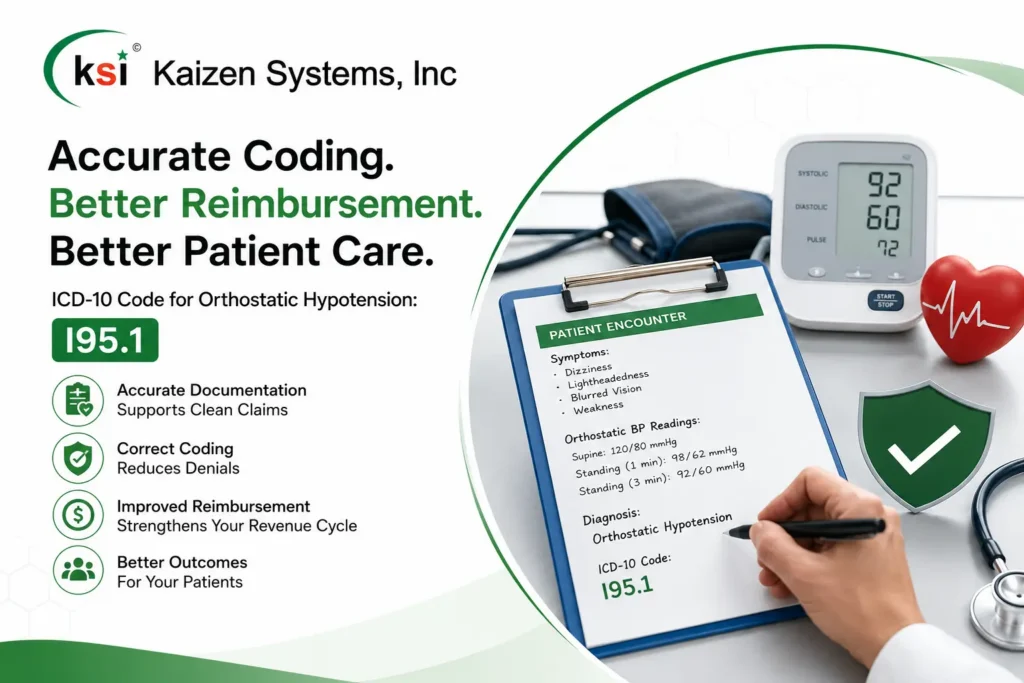
The primary ICD-10 code for orthostatic hypotension is I95.1. This is a billable, specific code, meaning it can be used directly on a claim for reimbursement purposes without needing an additional code to complete the diagnosis.
You may also see this written slightly differently depending on where you look:
- ICD-10 code for orthostatic hypotension — I95.1
- ICD 10 cm code for orthostatic hypotension — I95.1 (the “CM” stands for Clinical Modification, the US-specific version of ICD-10)
- ICD-10 code for orthostatic hypotensio — a common typo, but it still points to the same code, I95.1
I95.1 falls under category I95 (Hypotension), which sits inside the larger I95–I99 section covering other and unspecified disorders of the circulatory system. Synonyms you might see in a chart that point to this same code include “postural hypotension” and “chronic orthostatic hypotension.”
Related Codes Coders Should Know
Orthostatic hypotension is not a one-size-fits-all diagnosis. Depending on the cause, a different code may apply, and choosing the right one affects both accuracy and reimbursement. Here are the codes that often come up alongside I95.1:
I95.2 – Hypotension due to drugs Use this code when the orthostatic hypotension is caused by a medication, such as a blood pressure drug or diuretic. If the provider documents the specific drug responsible, an additional code from the T36–T50 range may be needed to identify it.
I95.83 – Hypotension of hemodialysis This applies when blood pressure drops during or shortly after a dialysis session. It is common in patients with chronic kidney disease and should be documented clearly to support this more specific code.
G90.3 – Neurogenic orthostatic hypotension (Shy-Drager syndrome) This is important because it is listed as an “Excludes1” note under I95.1. That means I95.1 and G90.3 cannot be used together. If the orthostatic hypotension is part of a neurogenic disorder like Shy-Drager syndrome, G90.3 should be used instead, not alongside I95.1.
R03.1 – Nonspecific low blood pressure reading This code is for situations where a low reading is documented but does not meet the clinical criteria for true orthostatic hypotension. It is a good fallback when the diagnosis has not been confirmed with proper positional readings.
I95.89 – Other specified forms of hypotension Used when hypotension is documented with features that do not cleanly fit into the more specific categories above.
Knowing the difference between these codes is where coding accuracy really pays off. Picking I95.1 when the true cause is medication-related, or missing the documentation needed to support I95.83, can lead to claim denials or, worse, an inaccurate medical record.
Why Accurate Coding Matters Here
Orthostatic hypotension might seem like a small, single-line diagnosis, but it has a real impact on a practice’s revenue cycle. A few reasons this code deserves attention:
1. It affects claim approval. Payers expect documentation that matches the code billed. If a provider notes “dizziness on standing” without recording the actual blood pressure readings before and after standing, the claim may not hold up to a payer’s review.
2. It connects to other diagnoses. Orthostatic hypotension often appears alongside falls, syncope, or chronic conditions like diabetes and Parkinson’s disease. Coders need to capture the full clinical picture, not just the isolated hypotension diagnosis, so the patient’s risk level and care needs are properly reflected.
3. It supports medical necessity. Insurance companies look for medical necessity before approving tests, medications, or follow-up visits related to this diagnosis. A precise, well-supported code helps justify orders like tilt-table testing or compression stockings.
Documentation Tips For Providers
For the I95.1 code (or any of its related codes) to hold up during claims review, documentation should ideally include:
- Blood pressure readings taken while lying down and again after standing, with timestamps
- A clear statement of symptoms experienced during the position change
- Any suspected or confirmed cause (medication, dehydration, dialysis, neurological condition)
- Relevant patient history, such as diabetes, Parkinson’s disease, or recent medication changes
When this information is missing, coders are often left guessing, which increases the chance of using a less specific code or facing a denial later on.
How This Fits Into The Bigger Billing Picture
Getting one code right is rarely the whole story. Orthostatic hypotension is the kind of diagnosis that often shows up in older patients with multiple chronic conditions, which means it is frequently bundled with other visits, labs, and follow-up care. A small coding mistake here can ripple into bigger issues, like delayed reimbursement or repeated denials that eat into staff time.
This is exactly why many small practices choose to work with a dedicated billing and coding partner rather than handling everything in-house. A team that stays current on ICD-10-CM updates, payer-specific rules, and documentation requirements can catch these details before a claim is ever submitted, saving practices from costly rework down the line.
Final Thoughts
The ICD-10 code for orthostatic hypotension, I95.1, is straightforward on the surface, but getting it right depends on solid documentation and knowing when a related code, like I95.2, I95.83, or G90.3, is the better fit. For providers, this means recording clear blood pressure readings and symptom details. For billing teams, it means staying alert to the small distinctions that separate a clean claim from a denied one.
If your practice is looking for support with accurate coding, denial management, or full-scale revenue cycle management, Kaizen Systems works with small practices across the USA to take this kind of detail off your plate, so you can stay focused on patient care.