If you work in a medical practice — or run one — you’ve probably heard the word “HIPAA” more times than you can count. But when it comes to billing and coding specifically, a lot of people treat HIPAA as just another checkbox. Something you put a policy about on your wall and move on. The truth is, HIPAA isn’t just red tape. In billing and coding, it’s the backbone of how patient information is handled, protected, and shared — and getting it wrong doesn’t just mean fines. It can mean losing patient trust, losing payer contracts, and in serious cases, facing federal penalties.
Let’s break down why HIPAA actually matters in the day-to-day world of billing and coding, in plain terms.
What Does Hipaa Have To Do With Billing?

The Health Insurance Portability and Accountability Act (HIPAA) was signed into law in 1996. Its Privacy Rule and Security Rule are what most billing and coding professionals deal with on a regular basis.
When a claim gets submitted to an insurance company, it carries a significant amount of Protected Health Information — or PHI. We’re talking about a patient’s name, date of birth, diagnosis codes, procedure codes, dates of service, and their insurance ID number. Every single one of these data points falls under HIPAA protection.
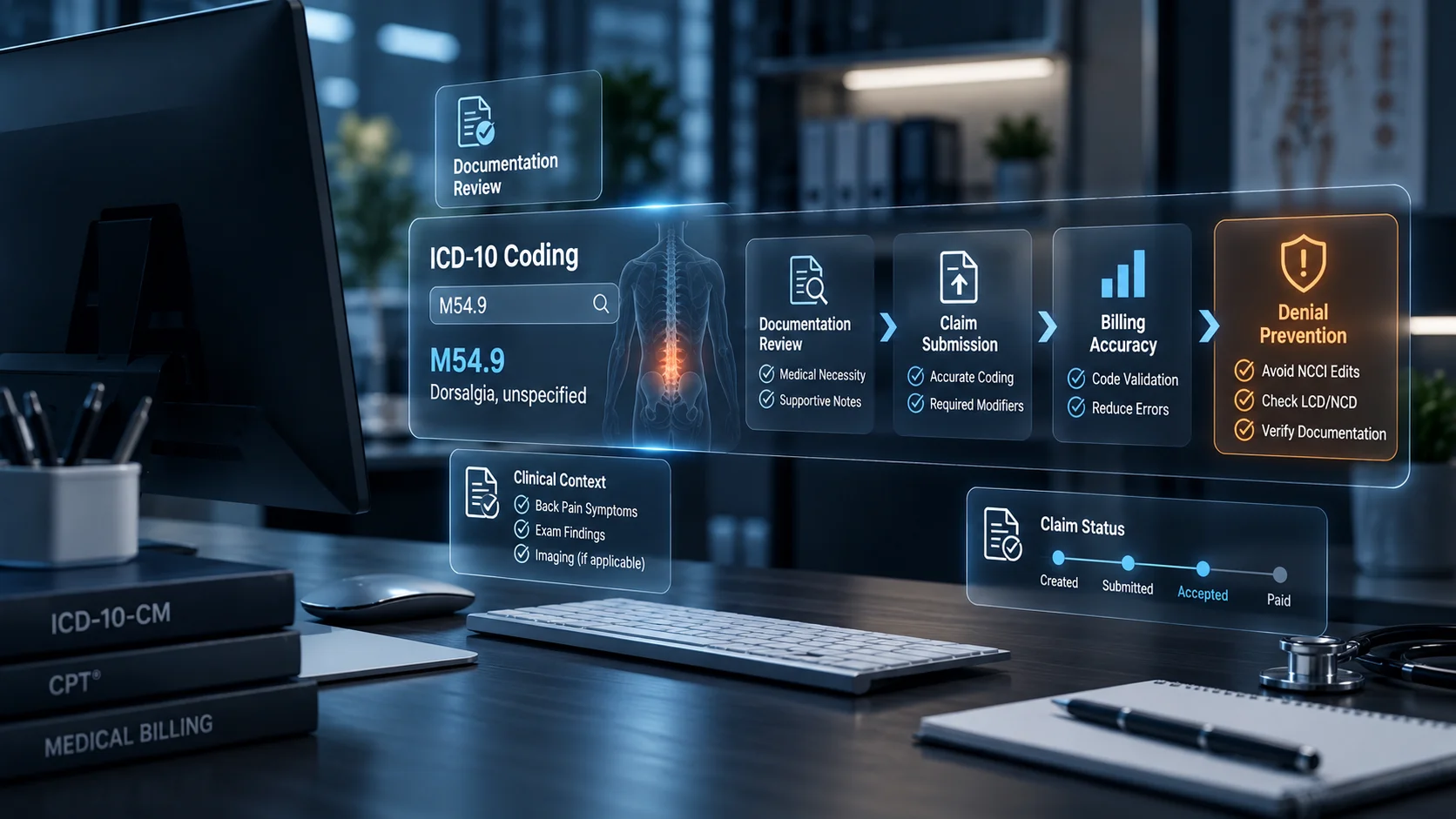
So every time a coder assigns an ICD-10 or CPT code, and every time a biller submits that claim electronically, HIPAA rules apply. This isn’t occasional — it happens dozens or hundreds of times a day in a typical practice.
The Real Risks Of Non-Compliance
Here’s where things get serious. HIPAA violations in billing and coding aren’t rare — and they’re expensive.
Financial penalties can range from $100 to $50,000 per violation, depending on the level of negligence involved. In 2023 alone, the Office for Civil Rights (OCR) settled multiple cases with healthcare providers for hundreds of thousands of dollars over improper disclosure of PHI.
But fines aren’t the only consequence. A HIPAA breach can:
- Trigger a full audit of your billing practices
- Force you to notify every affected patient
- Damage your reputation in the community
- Result in termination of payer contracts
- Lead to criminal charges in cases of intentional misuse
For a small practice, even a moderate fine or audit can be financially devastating. For a larger organization, the reputational fallout can take years to recover from.
How Hipaa Shapes The Billing And Coding Process
Let’s get practical. Here’s where HIPAA directly touches the billing and coding workflow:
1. Electronic Claim Submission HIPAA’s Transaction and Code Set Standards require that electronic claims be submitted using specific formats — primarily the ANSI X12 837 standard. Practices that submit claims must follow these formats, which also ensure that PHI is being transmitted in a standardized, secure way.
2. Coding Accuracy Inaccurate coding isn’t just a revenue problem — it can be a compliance problem. Upcoding (billing for a more expensive service than what was provided) or unbundling codes to inflate reimbursement are practices that violate both HIPAA’s fraud-related provisions and the False Claims Act. Coders have a responsibility to assign codes based on documented clinical information, nothing more and nothing less.
3. Minimum Necessary Standard HIPAA requires that only the minimum necessary PHI be shared when submitting claims or communicating with payers. Billing staff should only access the patient information they actually need to do their job — not entire medical histories unless the claim requires it.
4. Business Associate Agreements (BAAs) If your practice uses an outsourced billing company, a clearinghouse, or a billing software vendor, HIPAA requires a signed Business Associate Agreement in place. This legally binds the outside party to protect PHI the same way your practice must. Skipping this step — even accidentally — is a direct HIPAA violation.
5. Data Security in Billing Systems Whether your team uses a practice management system, billing software, or submits claims through a clearinghouse portal, HIPAA’s Security Rule requires that all electronic PHI be protected through access controls, encryption, audit logs, and regular risk assessments.
Why Small Practices Are Especially Vulnerable
Larger health systems have entire compliance departments. Small and mid-size practices often rely on a handful of staff members wearing multiple hats. That creates gaps.
A biller who also handles front desk duties might not have received formal HIPAA training in years. A coding team stretched too thin might take shortcuts. An outsourced billing company that isn’t properly vetted might not have a BAA in place.
These aren’t rare situations — they’re common. And they’re exactly the kinds of gaps that result in audits and penalties.
Working with a billing partner that treats HIPAA compliance as a core part of the service — not an afterthought — makes a significant difference. It means your claims are handled by people who understand the rules, and your patient data is protected at every step of the revenue cycle.
Compliance And Revenue Aren’t In Conflict
One thing that’s worth saying clearly: HIPAA compliance and strong billing performance are not opposites. A lot of practices assume that tight compliance slows things down or makes billing harder. In practice, the opposite is true.
Accurate coding reduces denials. Proper documentation of diagnoses leads to cleaner claims. Secure and compliant data handling builds payer trust. When your billing process is built on a solid compliance foundation, you see fewer rejections, faster reimbursements, and a healthier revenue cycle overall.
Partner With Kaizen Systems For HIPAA-Compliant Medical Billing And Coding
HIPAA matters in billing and coding because patient information is at the center of every claim. Every code assigned, every claim submitted, and every payment posted involves protected data that patients trust you to handle carefully.
The practices that take HIPAA seriously — not just as a legal requirement, but as a standard of professionalism — are the ones that avoid costly violations, maintain strong payer relationships, and build lasting trust with their patients.
If you’re unsure whether your billing process is fully HIPAA-compliant, or if you’re ready to work with a billing partner who treats compliance as a given, Kaizen Systems is here to help. With over 20 years of experience in medical billing, coding, and compliance services, we help practices across the USA protect their patients, their revenue, and their reputation.