
Accurate medical billing and coding play an important role in the financial health of medical practices. For clinics in Chicago, Illinois, even small mistakes in patient information, procedure codes, insurance details or medical documentation can delay payments and create additional administrative work. When claims are rejected or denied, staff must spend time identifying the problem, correcting information, submitting claims again or preparing appeals when appropriate. These tasks can affect cash flow and take attention away from other responsibilities.
Understanding the most common medical billing and coding errors helps healthcare providers build more reliable billing processes. With accurate documentation, regular claim reviews, and effective revenue cycle management, Chicago clinics can reduce avoidable mistakes and improve their chances of receiving appropriate reimbursement.
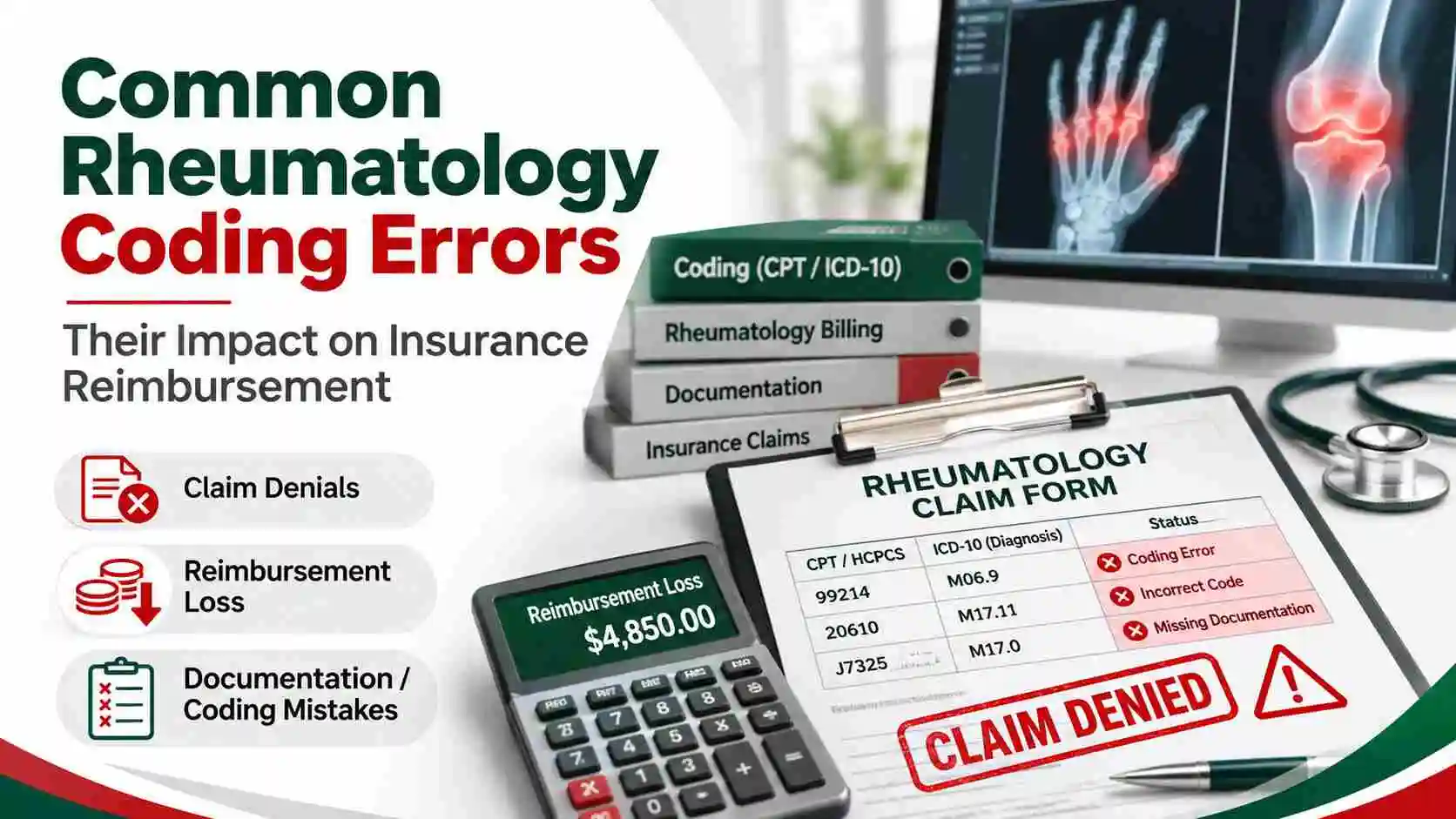
1. Incorrect Icd-10-Cm, Cpt, And Hcpcs Codes
Medical codes communicate diagnoses, procedures and healthcare services to insurance companies. Incorrect code selection can lead to claim denials, payment delays, or reimbursement that does not accurately reflect the services provided.
Common coding mistakes include:
- Selecting a diagnosis code that does not match the medical record.
- Using an outdated or incomplete code.
- Reporting a procedure that is not supported by the documentation.
- Choosing a code that lacks the required level of specificity.
For example, a Chicago primary care clinic may submit a claim using a diagnosis code that does not accurately represent the condition documented during the patient’s visit. The payer may request clarification or deny the claim, depending on its requirements.
How to prevent it: Use current coding references, review official coding guidelines, and ensure that every reported service is supported by the medical record. CMS provides guidance on correct coding and the use of CPT and HCPCS codes for applicable Medicare claims.
2. Missing Or Incomplete Medical Documentation
Medical documentation supports the services billed to an insurance company. If a clinical note does not adequately describe the patient’s condition, treatment, or service provided, the claim may face reimbursement problems.
Documentation issues can include missing examination findings, incomplete treatment notes, unclear medical necessity, or insufficient support for a separately reported service.
For instance, a provider may bill an evaluation and management service alongside a procedure. If the record does not demonstrate that a separately identifiable evaluation and management service occurred when required, the payer may question the additional charge.
How to prevent it: Establish documentation standards for providers and clinical staff. Review medical records before claim submission, ensure that the documented services match the codes billed, and request clarification from the treating provider when necessary. Never add unsupported details simply to obtain payment.
3. Incorrect Use Of Modifiers
Modifiers provide additional information about a procedure or service. They can explain circumstances such as a distinct service, a particular anatomical location, or another situation recognized by applicable coding rules.
However, incorrectly applying modifiers can trigger claim edits or denials. Using modifier 25 without adequate documentation or appending modifier 59 without meeting the relevant requirements are examples of potential coding problems.
CMS’s National Correct Coding Initiative (NCCI) includes edits designed to prevent inappropriate payment for certain combinations of services. An appropriate modifier may allow separate reporting in specific circumstances, but it must be supported by the facts of the encounter and applicable rules.
How to prevent it: Train coding staff on modifier definitions, payer policies, and current NCCI edits. Review claims containing commonly misused modifiers before submission. Do not use a modifier solely to bypass an automated edit.
4. Patient Eligibility And Insurance Verification Errors
A medically appropriate service does not automatically guarantee insurance payment. Coverage depends on the patient’s plan, the service provided, the applicable benefits, and other payer requirements.
Common eligibility and insurance errors include:
- Billing an inactive insurance policy.
- Entering an incorrect member or policy number.
- Submitting a claim to the wrong primary payer.
- Overlooking referral or prior authorization requirements.
For Chicago clinics serving patients with employer-sponsored insurance, Medicare, Medicaid, or Medicare Advantage plans, verification procedures should reflect the requirements of each applicable payer.
How to prevent it: Verify eligibility before appointments whenever possible. Confirm patient demographics, coverage dates, plan details, and referral or authorization requirements. Recheck coverage when a patient reports a change in insurance.
Remember that eligibility verification is not a guarantee of payment. The service must still meet the applicable coverage, documentation, and billing requirements.
5. Duplicate Claims And Incorrect Billing Information
Duplicate claims can occur when staff resubmit a claim without checking its status or when separate billing systems transmit the same service more than once. These errors may cause duplicate-claim denials and complicate payment reconciliation.
Incorrect billing information can create similar problems. A misspelled patient name, wrong date of birth, inaccurate date of service, incorrect provider identifier, or mismatched billing information may prevent a payer from processing a claim correctly.
How to prevent it: Maintain consistent patient records, use claim-scrubbing tools, and check claim status before resubmitting a previously submitted claim. Reconcile electronic remittance advice and payment records regularly so staff can identify duplicate submissions and unresolved claims.
6. Missed Filing Deadlines
Insurance companies establish claim submission deadlines, and these can vary by payer, contract, and claim type. Missing the applicable deadline can result in a denial even when the service was medically necessary and correctly documented.
For Medicare fee-for-service claims, the general filing deadline is one calendar year after the date of service, subject to applicable exceptions. Commercial insurers and other programs may have different requirements.
How to prevent it: Track filing deadlines by payer, monitor claims that remain unsubmitted, and investigate clearinghouse rejections promptly. Establish internal deadlines that allow sufficient time to correct errors before the payer’s filing limit expires.
7. Inadequate Denial Management And Follow-Up
Some clinics focus heavily on submitting new claims but lack a consistent process for following up on unpaid or denied claims. As a result, correctable errors may remain unresolved, appeal deadlines may be missed, and outstanding balances can accumulate.
A denial should be treated as information about a problem that needs investigation rather than simply as a final outcome.
How to prevent it: Categorize denials by reason, payer, service type, and root cause. Assign responsibility for follow-up, prioritize high-value and time-sensitive claims, and track whether corrective actions resolve recurring issues. Review denial trends regularly to identify training needs or workflow problems.
How Chicago Clinics Can Improve Reimbursement Accuracy
Reducing medical billing and coding errors requires a consistent process rather than a single software solution. Chicago healthcare practices can strengthen their billing operations by taking the following steps:
- Conduct regular claim audits: Review a sample of submitted claims to identify coding, documentation, and billing inconsistencies.
- Train staff regularly: Provide updates on coding changes, payer policies, authorization requirements, and denial patterns.
- Use claim-scrubbing tools: Check for missing fields, invalid code combinations, and other detectable errors before submission.
- Monitor key performance indicators: Track denial rates, days in accounts receivable, first-pass acceptance, and timely filing performance.
- Strengthen communication: Encourage billing professionals to work with providers when documentation needs clarification.
- Review payer-specific rules: Maintain current guidance for the insurers commonly used by the practice.
These measures help clinics identify problems earlier, reduce avoidable rework, and create a more predictable reimbursement process.
How Kaizen Systems Supports Medical Practices
Managing billing, coding, claim submission, payment posting, accounts receivable, and denial follow-up can place considerable demands on a healthcare practice’s administrative team. Medical Billing and Coding in Chicago requires accurate documentation, efficient claim management, and consistent follow-up to help practices maintain a healthy revenue cycle.
Kaizen Systems helps healthcare organizations strengthen their revenue cycle management processes through medical billing support, claims management, accounts receivable follow-up, and denial management. A structured approach can help practices identify recurring billing issues, improve claim follow-up, and maintain more consistent workflows.
For Chicago clinics, reviewing existing billing processes can be a practical starting point. Identifying common denial reasons and addressing their underlying causes can help teams make better use of their time while supporting accurate, compliant claims.
Conclusion
Medical billing and coding errors can create avoidable financial and administrative challenges for Chicago clinics. Incorrect codes, incomplete records, modifier mistakes, insurance verification problems, and missed filing deadlines can all interfere with timely reimbursement.
By investing in staff training, regular claim audits, accurate documentation, and consistent denial management, healthcare providers can improve billing accuracy and address recurring problems more effectively.
Kaizen Systems helps healthcare practices strengthen medical billing and revenue cycle management processes. Visit kaizenus.com to learn more about medical billing support and explore ways to improve your practice’s claims management workflow.