
Medical billing and coding are essential parts of running a successful healthcare practice. From independent physicians and specialist clinics to larger medical groups, healthcare providers in Chicago, Illinois, must manage patient records, insurance requirements, coding accuracy, claim submissions and payment follow-ups. Even small administrative mistakes can lead to rejected claims, delayed reimbursements and additional work for staff. The challenge is not simply submitting claims. Providers must also keep up with changing coding guidelines, verify insurance coverage, maintain accurate documentation, and follow payer-specific billing rules. For busy healthcare practices, these responsibilities can put pressure on both administrative teams and financial performance.
Understanding the common challenges of medical billing and coding in Chicago can help providers improve their revenue cycle, avoid preventable errors, and spend more time focusing on patient care.
1. Managing Different Insurance Requirements
Healthcare providers in Chicago may work with Medicare, Illinois Medicaid, commercial insurance companies and managed care organizations. Each payer can have different requirements for eligibility, covered services, referrals, prior authorization, claim submission and reimbursement. For example, a service covered under one insurance plan may require prior authorization under another. Similarly, a patient may have changed insurance coverage without updating their information at the medical office.
Submitting claims without checking these details can result in denials or payment delays.
How providers can address this challenge:
- Verify insurance eligibility before appointments and procedures.
- Confirm referral and prior authorization requirements.
- Maintain updated payer policies and billing instructions.
- Check whether the provider and service are covered under the patient’s plan.
- Review coordination-of-benefits information when multiple insurance plans apply.
Illinois Medicaid providers should also consult the relevant Illinois Department of Healthcare and Family Services provider handbooks, which outline program-specific billing policies and procedures.
2. Medical Coding Errors And Incomplete Documentation
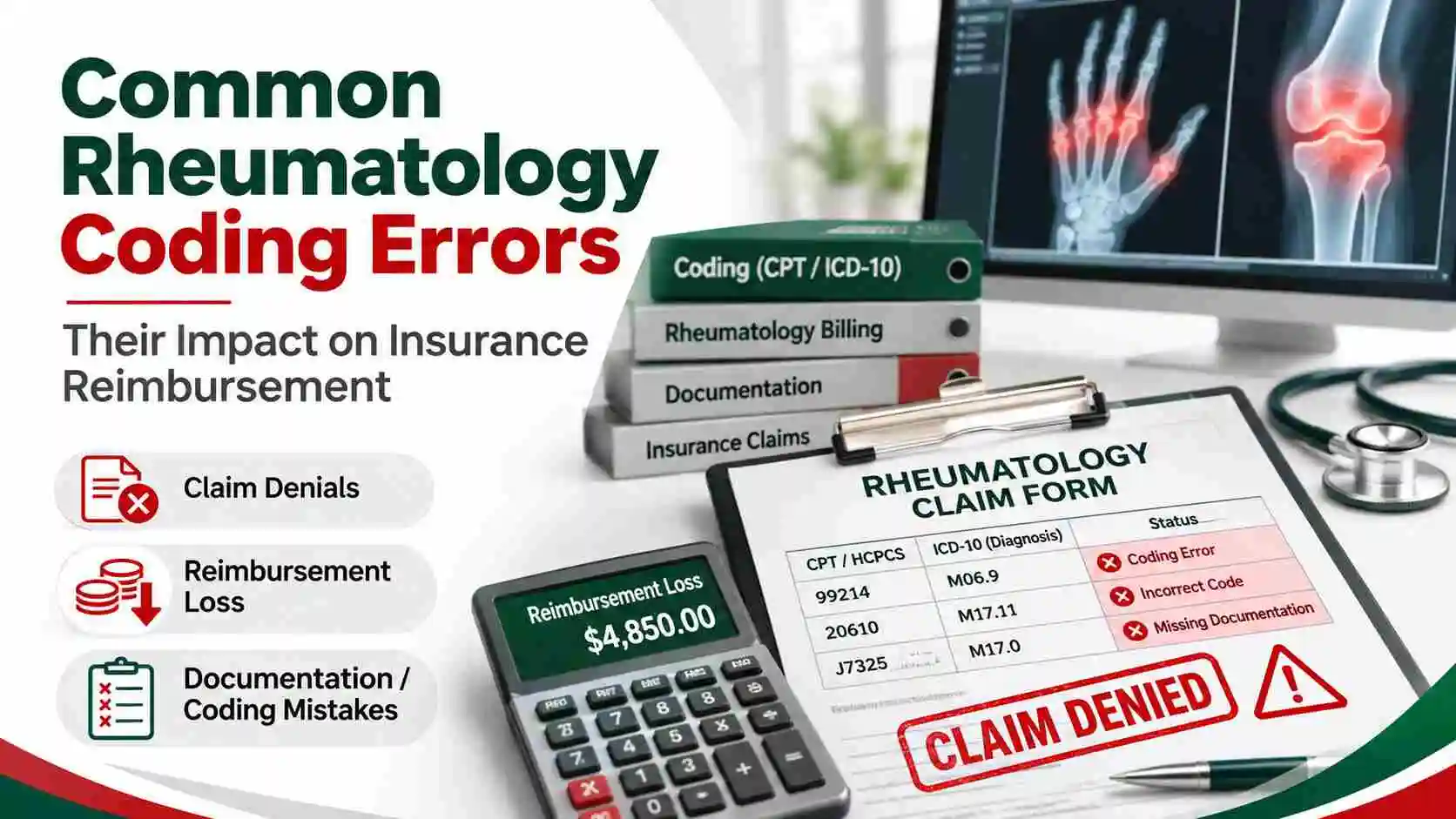
Accurate medical coding is necessary to communicate diagnoses, procedures and services to insurance companies. Errors in ICD-10-CM diagnosis codes, CPT procedure codes, or HCPCS codes can affect claim processing and reimbursement. Common problems include selecting an incorrect code, using an inappropriate modifier, entering an incorrect date of service, or submitting a code that does not match the provider’s documentation.
Incomplete medical records can create similar issues. If the documentation does not sufficiently support the service billed, the payer may request additional information, reduce payment, or deny the claim.
Healthcare providers should ensure that coding accurately reflects the services performed and the clinical information documented in the patient’s record.
Practical solutions include:
- Reviewing clinical documentation before submitting claims.
- Using current coding references and official guidelines.
- Checking code combinations, modifiers, and units of service.
- Conducting regular internal coding audits.
- Providing ongoing training for billers, coders, and clinical staff.
The Centers for Medicare & Medicaid Services (CMS) provides guidance on documentation, medical necessity, coding, and common billing denials.
3. Claim Denials And Delayed Reimbursements
Claim denials are among the most frustrating challenges for healthcare providers. When an insurer denies a claim, staff may need to review the explanation, correct errors, gather supporting documents, and submit a corrected claim or appeal. Repeated denials can increase administrative costs and delay the money a practice receives for services already provided. Some claims may also become difficult to recover if the practice misses the payer’s filing or appeal deadlines.
Common reasons for claim denials include:
- Incorrect patient or insurance information.
- Missing prior authorization or referrals.
- Coding errors and insufficient medical documentation.
- Duplicate claim submissions.
- Services that do not meet the payer’s coverage or medical necessity requirements.
- Missed claim submission deadlines.
How to reduce denials: Establish a consistent denial management process. Categorize denials by reason, assign responsibility for follow-up, correct errors promptly, and monitor recurring problems. Reviewing denial trends helps practices address the underlying causes instead of repeatedly fixing the same mistakes.
4. Keeping Up With Changing Coding Rules And Compliance
Medical billing and coding requirements change regularly. Healthcare providers must stay informed about coding updates, payer policies, documentation standards, and applicable federal and state regulations. For example, ICD-10-CM diagnosis coding guidelines are updated periodically. The applicable code set depends on the date of service, so using an outdated code may create avoidable billing problems. Providers must also follow relevant HIPAA requirements when handling protected health information.
Illinois Medicaid billing adds another layer of complexity because managed care organizations may maintain different billing procedures and requirements. The state publishes provider resources and updates to help participating practices understand these obligations. To maintain compliance, healthcare organizations should review official guidance, train staff on relevant changes, protect patient information, and periodically audit billing practices. Clear internal procedures can help reduce errors and support consistent claim submissions.
5. Prior Authorization And Insurance Verification
Prior authorization can create additional work for medical practices, particularly when treatments, diagnostic tests, or procedures require approval before the service is provided. Staff may need to submit clinical documentation, communicate with insurance companies, respond to requests for additional information, and track authorization decisions. Delays can disrupt appointment schedules and create uncertainty about payment.
The American Medical Association’s 2024 survey reported that physicians and their staff spent an average of 13 hours per week handling prior authorization tasks. This is a nationwide finding, not a Chicago-specific estimate. Healthcare providers can improve this process by creating an authorization checklist, verifying requirements before appointments, maintaining a record of approval numbers, and tracking pending requests. Early verification helps identify potential issues before they affect patient care or claim submission.
6. Staffing Shortages And Administrative Workload
Medical billing requires attention to detail, knowledge of coding standards, and familiarity with insurance procedures. However, smaller practices may have limited administrative staff who must handle billing alongside appointment scheduling, patient inquiries, record management, and other responsibilities.
When workloads become too heavy, important tasks can be overlooked. Claims may be submitted late, unpaid balances may go unnoticed, and denial follow-ups may be delayed. Technology can help reduce repetitive work, but software alone cannot resolve every billing issue. Practices still need trained professionals who can review exceptions, interpret payer responses, and ensure that claims accurately reflect the care provided.
A practical approach is to document billing workflows, establish clear staff responsibilities, use appropriate practice management software, and monitor outstanding claims regularly.
7. Practical Ways To Improve Medical Billing And Coding
Healthcare providers do not need to overhaul their entire billing operation to make meaningful improvements. A structured approach can help identify weaknesses and improve financial performance over time.
Consider these steps:
- Verify patient information: Confirm insurance coverage, demographic details, and authorization requirements before services are delivered.
- Improve documentation: Ensure medical records accurately support the diagnoses, procedures, and services billed.
- Check claims before submission: Use claim-scrubbing tools and manual reviews to identify missing information and coding inconsistencies.
- Track accounts receivable: Review unpaid claims by age and prioritize follow-up based on deadlines and outstanding balances.
- Analyze denial patterns: Identify recurring errors and train staff to prevent them.
- Review performance regularly: Monitor clean claim rates, denial rates, days in accounts receivable, and collection performance.
- Stay informed: Review relevant CMS guidance, Illinois Medicaid updates, and individual payer policies.
These measures can help practices identify preventable problems, improve billing consistency, and make better decisions about their revenue cycle management processes.
8. How Kaizen Systems Can Support Healthcare Providers
Managing medical billing and coding internally can become challenging as a practice grows or insurance requirements become more complex. Professional billing support can help healthcare providers manage administrative responsibilities while maintaining focus on patient care.
Kaizen Systems supports healthcare organizations with medical billing and revenue cycle management services. Depending on a practice’s needs, professional support may include claim submission, payment posting, accounts receivable follow-up, denial management, and billing workflow improvements.
Working with an experienced billing partner can help practices identify recurring claim issues, maintain consistent follow-up procedures, and improve visibility into outstanding payments. Effective collaboration also helps clinical and administrative teams address documentation gaps and strengthen billing processes.
Before outsourcing, providers should evaluate a partner’s experience, quality controls, reporting processes, data security practices, and ability to support their specialty and payer requirements.
The goal is not simply to outsource administrative tasks. It is to build a more organized, accurate, and sustainable revenue cycle.
Conclusion
Medical billing and coding challenges can affect a healthcare practice’s cash flow, administrative efficiency, and ability to manage daily operations. For healthcare providers in Chicago, addressing insurance requirements, coding errors, claim denials, authorization delays, and compliance responsibilities requires a consistent and well-organized approach. By improving documentation, training staff, monitoring unpaid claims, and reviewing denial patterns, practices can strengthen their billing processes and reduce avoidable administrative work.
Kaizen Systems can help healthcare providers explore practical medical billing and revenue cycle management solutions tailored to their operational needs. Visit kaizenus.com to learn more about available services and discuss how professional billing support may benefit your practice.