

2027 Medicare Proposed Rule: Major Changes To Physical Therapy Reimbursement, Practice Expense RVUs, And Remote Therapeutic Monitoring (RTM)

Every physical therapy practice manager has learned to treat “new year, new codes” as a recurring January headache — updated CPT descriptors, shifted RVUs, a fresh set of denial reasons nobody’s front desk has seen before. The 2027 cycle is shaping up to be a bigger version of that headache than usual, with changes that […]
The 2.5% “Efficiency Adjustment”: Why The 2026 Medicare Rule Is A Stealth Cut For Procedural Medicine

Picture an orthopedic surgery practice closing its books for January 2026. The billing team pulls up the new Medicare conversion factor, sees a 3.26% increase and tells the partners reimbursement is finally moving in the right direction. Three months later, the actual deposits don’t match that story. Per-case Medicare revenue on their bread-and-butter procedures is […]
10 Revenue Cycle Checkpoints That Prevent Medical Billing Denials Before They Happen

A denial is rarely born at the payer’s desk. Most trace back to a moment weeks earlier — a skipped verification, a missing modifier, a deadline nobody was tracking. By the time the rejection letter arrives, you’re not preventing anything anymore. You’re doing forensic work on a problem that already cost you money. The scale […]
M54.9 ICD-10 Code: What Does Dorsalgia, Unspecified Mean?

Back pain is a routine complaint in medical practices. A patient may come in with a few days of discomfort, ongoing pain, stiffness, or pain that makes everyday activities difficult. But while back pain is common, coding it correctly is not always as simple as it sounds. One ICD-10-CM code that often comes up is […]
Skin Substitute CPT Codes: Skin Graft Coding, Billing & Documentation Guide

Skin grafts and skin substitutes are widely used to help manage wounds, burns, ulcers, surgical defects, and other areas where normal skin needs support for healing. While the clinical procedure may be familiar to providers, coding and billing these services correctly can be much more complicated. The right CPT code depends on several details, including […]
What Is The ICD-10 Code for Knee Pain? M25.561, M25.562 & M25.569 Explained

Knee pain is a common reason patients visit primary care providers, orthopedic specialists, urgent care clinics, and physical therapists. For healthcare organizations, however, documenting and coding knee pain correctly is about more than selecting a code from a list. The documentation must support the diagnosis, laterality needs to be clear, and the code must match […]
Medical Credentialing For Nurse Practitioners: From CAQH To Payer Enrolment

For nurse practitioners, becoming an in-network provider can open the door to more insured patients and create a stronger foundation for practice growth. But getting there involves more than having an active license and a National Provider Identifier (NPI). Insurance companies need to verify your professional credentials, review your information, and complete their own enrollment […]
Institutional Claims VS. Professional Claims In Medical Billing: Key Differences, Claim Forms, Coding, Billing & Reimbursement Explained

Medical billing claims are not all submitted in the same way. Two of the most important claim categories in U.S. healthcare billing are institutional claims and professional claims. Understanding the difference is essential because using the wrong claim format, reporting incorrect billing information, or missing required coding details can lead to rejected or delayed payments. […]
Consequences Of Inefficient Accounts Receivable Management In Medical Billing: Impact On Cash Flow, Revenue And Practice Operations
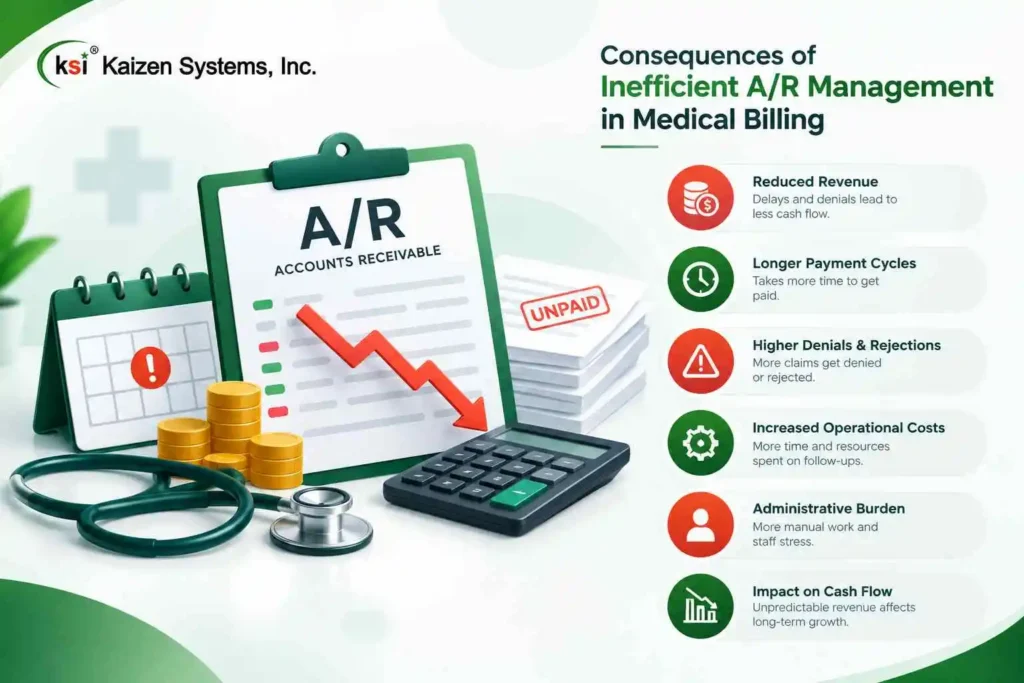
Accounts receivable (A/R) is one of the most important financial areas of a healthcare practice. Every unpaid claim, delayed insurance payment, unresolved denial and outstanding patient balance represents money that has been earned but has not yet reached the provider. Accounts receivable management in medical billing involves monitoring these outstanding balances, identifying why payments are […]
AI In Revenue Cycle Management: Why 63% Are Adopting AI But Only 15% Are Fully Integrated

Artificial intelligence is no longer just a future idea in healthcare revenue cycle management (RCM). It is already being used by a large number of healthcare organizations to automate repetitive work, improve claims processing, identify billing problems, and support faster reimbursement. But there is an important gap between using AI and getting measurable financial results […]